
Recent studies reinforce the case for ecologically representative and connected MPAs
31/10/2025
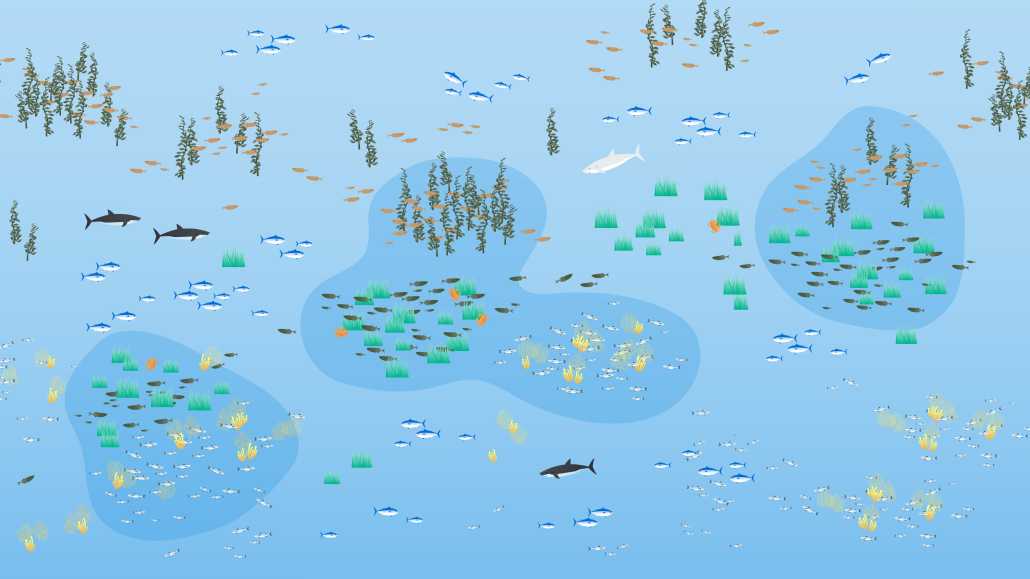
Two new scientific studies published this summer by MPA Europe partners offer fresh evidence to support the design of effective and connected marine protected area (MPA) networks reinforcing the scientific foundations of the project.
The first, published in July’s issue of Marine Ecology Progress Series found that there is no simple relationship between marine ecosystems and multiple measures of species diversity. This suggests that functional measures of biodiversity like ecosystems are not a surrogate for species level measures. Thus, conservation aimed at protecting species needs to focus on species distribution and abundance rather than ecosystem mapping.
The second paper, published in August in Trends in Ecology & Evolution compared five independent studies prioritising where to best place MPAs globally. They overlapped in 1% of the ocean, suggesting that regardless of data used this 1% consensus area should be a top priority for full protection of biodiversity.
Complementing these peer‑reviewed studies, MPA Europe partners published the paper Comparison of the proposed MPA network for European Seas with projected ocean currents and climate velocities as Deliverable 2.10. This deliverable evaluates how projected ocean currents and climate velocities map onto an ecologically representative network of MPAs proposed for European seas, providing context on how ocean processes and climate change may influence connectivity and future biodiversity patterns within planned networks.
Taken together, these contributions reinforce two key points: first, that ecologically connected and representative MPA networks are informed by robust science; second, understanding how ocean dynamics and future climate conditions can inform conservation planning. These insights feed directly into MPA Europe’s work, which uses biodiversity data, ecological principles, and climate‑change scenarios to systematically identify optimal locations for MPAs across European seas.
By integrating the latest empirical science and project resources, MPA Europe continues to strengthen its evidence‑based planning process and supports the effective establishment of MPA networks in Europe and beyond.


